South Korea's Nuri Rocket: The Rise of a New Space Power
Space & Aerospace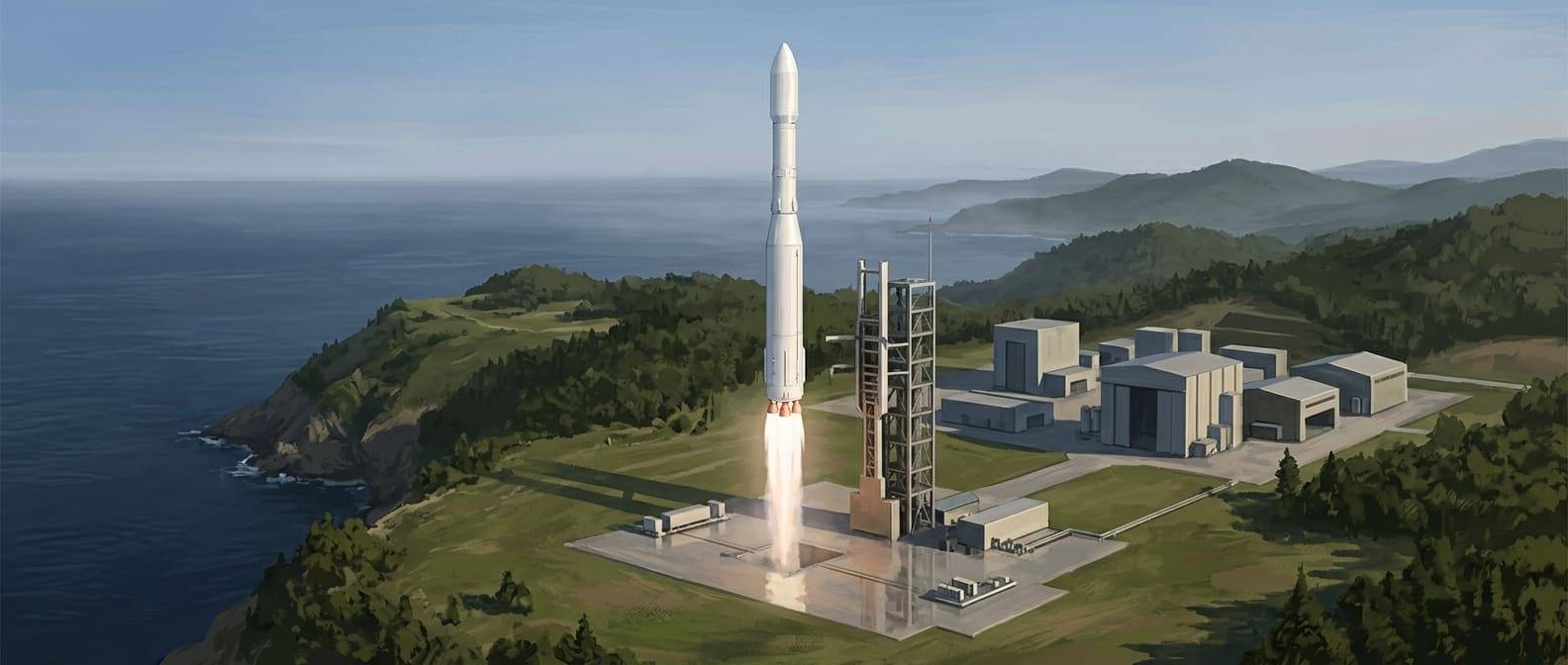
South Korea recently put five imaging satellites into orbit on a rocket built in its own factories. The achievement proves the country can launch its own hardware, but turning that momentum into a commercial launch industry is a harder challenge.
On October 7, 2026, a 200-ton rocket named Nuri climbed into late-day skies above the Naro Space Center in Goheung. The launch unfolded while most global headlines focused on giant reusable boosters in Texas or massive state missions in China. Yet on this quiet stretch of the South Korean coast, something remarkable was playing out in plain view. A country that used to rely on foreign partners for ride shares to space just proved it can loft its own working hardware on a rocket engineered entirely at home.
Getting a vehicle above the atmosphere is the visible part of spaceflight. The quieter challenge is whether South Korea can turn a string of successful test flights into an industrial launch business that survives without constant government hand-holding. That flight only makes sense if you know how long the country spent borrowing the first stage of its space story.
The Long Road to a Homegrown Rocket
South Korea did not start its orbital program with a purely local rocket. Its earlier effort, Naro-1 (also designated KSLV-I), was a hybrid vehicle. The Korea Aerospace Research Institute (KARI), the state lab behind the nation's space engineering, built a solid-fuel upper stage, but the liquid-fueled first stage came straight from Russia. That program was a grueling training exercise marked by two high-profile failures. A 2009 launch failed when a protective payload fairing refused to separate, and a 2010 flight ended in an explosion about 137 seconds after liftoff while Russian and Korean investigators argued over who was at fault. Success finally arrived in January 2013 when Naro-1 pushed a 100-kilogram research satellite into low Earth orbit (LEO).
Naro-1 taught Korean engineers how to handle launch operations, but relying on foreign suppliers left the nation's space ambitions at the mercy of outside politics. Around 2010, South Korea decided to build an orbital rocket entirely on its own terms. Designing liquid engines from a blank sheet of paper is notoriously difficult. A combustion chamber must burn supercold liquid oxygen and dense kerosene smoothly for minutes at a time without cracking or melting under pressure. Tanks must be constructed from thin metal sheets to keep weight down while remaining strong enough to endure the brutal vibrations of launch.
To prove the concept, KARI flew a single-stage suborbital test rocket in November 2018, launching its single 75-ton engine to an altitude of roughly 209 kilometers. That short hop set the stage for the full three-stage vehicle. When the completed rocket first flew in October 2021, the third stage shut down 46 seconds early, leaving a dummy satellite short of orbital speed. Eight months later, in June 2022, Nuri flew again and nailed its arrival into a sun-synchronous orbit (SSO), a pole-to-pole path that lets satellites pass over the same locations at about the same local solar time. That flight made South Korea the seventh nation to orbit a payload heavier than one ton using its own homegrown launch vehicle.
Yet even a successful launch leaves a practical question: what kind of machine is this rocket, really?
Inside the Rocket
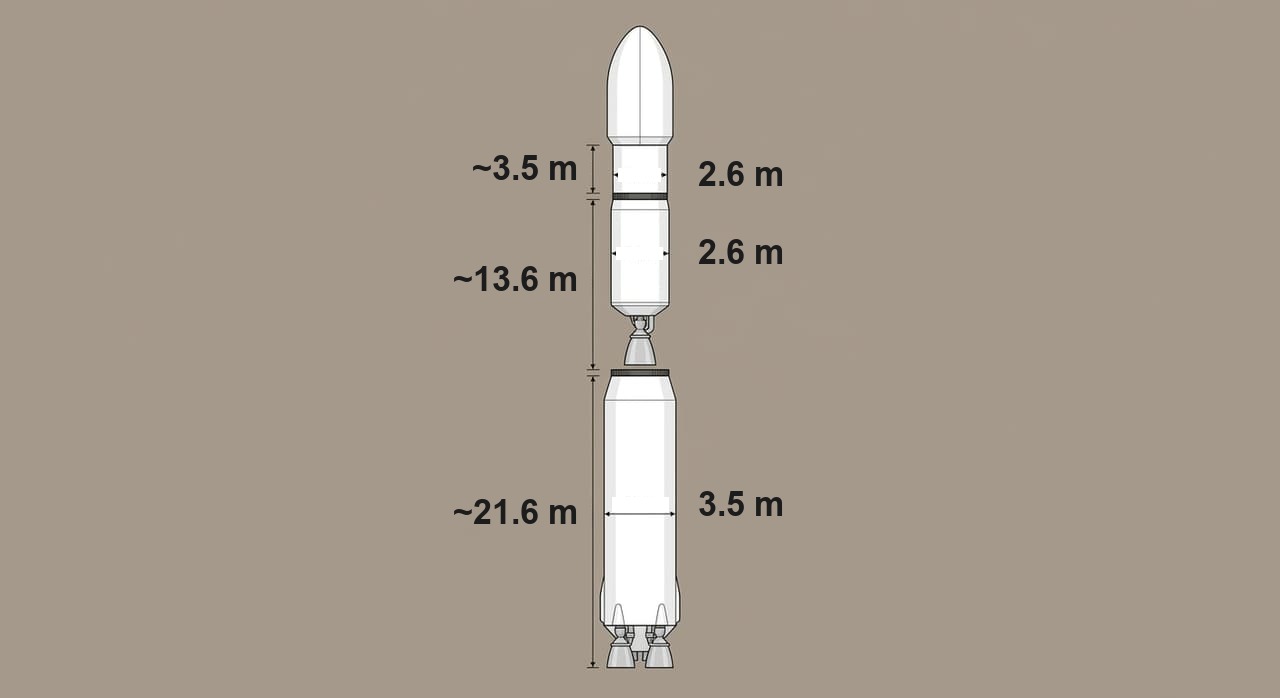
Standing about 47.2 meters tall, Nuri is a three-stage rocket that flies once and is not recovered. Every stage burns the same pair of liquids: liquid oxygen (LOX) and kerosene. That is a different machine from Naro-1, which flew a Russian liquid first stage under a Korean solid upper stage. Nuri also has no boosters strapped to its sides. The first stage is simply wider than the two stages stacked above it.
| Spec | Nuri |
|---|---|
| Height | 47.2 m |
| Liftoff mass | About 200 tons |
| First stage | 3.5 m across. Four 75-ton engines, about 300 tons of thrust at liftoff |
| Second stage | 2.6 m across. One 75-ton engine with a wider nozzle for flight above the air |
| Third stage | 2.6 m across. One 7-ton engine |
| Propellant | Liquid oxygen and kerosene on all three stages |
| Design payload | A 1.5-ton-class satellite to a 600-800 km sun-synchronous orbit |
| Reuse | None. Each stage is dropped once its work is done |
Staging is still the reason the stack is built this way. Empty tanks are dead weight, so the rocket throws them away and lets a smaller engine push what remains. The third stage is the one that finishes orbital speed, about 7.5 kilometers per second on the October 2026 flight. Altitude is not orbit. Orbit is moving sideways fast enough to keep falling around Earth. KARI's published job for Nuri is that 1.5-ton-class satellite to a 600-800 km sun-synchronous orbit. A 2022 Korean press report said demonstrated performance might support closer to 1.9 tons. KARI's own page still quotes the 1.5-ton class, so that is the number in the table.
Once a rocket proves it can reach those speeds in testing, the actual exam begins on operational flights.
The Latest Mission
The October 7, 2026 mission marked Nuri's fifth flight and its fourth consecutive success, bringing its track record to an 80 percent success rate according to the newly formed Korea AeroSpace Administration (KASA). Liftoff occurred at 12:25 p.m. local time from Goheung. Unlike earlier tests carrying inert weights or single primary satellites, this flight took on a complex orbital deployment schedule.
The main cargo consisted of five matching microsatellites from the NEONSAT program (New-space Earth Observation Satellite constellation). Each satellite weighs under 100 kilograms and carries optical cameras designed to take crisp high-resolution images of the Korean Peninsula and surrounding waters for national security and natural disaster tracking. The pathfinder satellite, NEONSAT-1, launched aboard a Rocket Lab Electron from New Zealand in April 2024. This October mission carried satellites two through six, popping them out about 35 to 40 seconds apart while Nuri's upper stage rotated roughly 45 degrees between each release.
The mission also carried ten smaller secondary payloads known as CubeSats, tiny modular satellites designed to standard dimensions. Nine of those small spacecraft deployed without issue, but one called PERSAT-02, developed by local startup Quaternion, failed to leave its launcher. Onboard camera footage showed that the ejection tube lid did not open despite a deployment signal being sent. KASA still declared the overall mission a success because the primary payload reached its planned 575-kilometer orbit, and all five main NEONSAT spacecraft phoned home to ground stations that same afternoon.
Releasing primary satellites on target proves the vehicle works, but it leaves open the question of who is actually running the show.
From a Government Rocket to an Industry
Building a state rocket inside a national lab is a scientific accomplishment, but running a launch enterprise requires private manufacturing muscle. In late 2022, South Korea selected Hanwha Aerospace as the prime contractor for the Nuri program. During the third flight in 2023, Hanwha took on production oversight, and by the fourth flight in November 2025, the company managed rocket assembly while state engineers at KARI ran the launch consoles.
By mid-2025, Hanwha signed a full technology transfer deal with KARI, securing exclusive manufacturing and launch management rights through 2032. On the October 2026 launch, Hanwha technicians sat at 20 of the 22 launch control consoles, with KARI staff stepping back into a supervisory role. Government officials called the flight a major milestone for private aerospace development.
Transferring control room duties does not mean a commercial launch market instantly appears. Almost every satellite riding on Nuri so far has been paid for by Korean government ministries or public research institutes. A private manufacturer can assemble vehicles and staff consoles, but true commercial independence requires outside customers who pay cash for dedicated rides. Can Nuri generate enough flight volume to maintain its supplier base, or will it remain a strategic state asset that launches only when local agencies have hardware ready?
That industrial transition raises a question that extends far beyond domestic factories: where does this rocket sit in a world dominated by commercial launch giants?
Where South Korea Fits
The useful comparison is not a slogan about who is ahead. It is which rocket each of these countries can actually fly, and what that rocket is built to lift. The table uses the most capable launcher each country has in regular service. Vehicles still in flight test, and rockets that fly only on rare government expeditions, are left off on purpose.
| Country | Rocket | Agency | What it is built to lift |
|---|---|---|---|
| United States | Falcon Heavy | SpaceX | About 64 tons to low Earth orbit if the boosters are not recovered. The side boosters are usually flown home, which gives up some of that lift. |
| China | Long March 5 | CNSA | About 14 tons toward geostationary transfer. The 5B version lifts about 25 tons to low Earth orbit. |
| Japan | H3 | JAXA | 6.5 tons or more to geostationary transfer on the heavy version, and 4 tons or more to a 500 km sun-synchronous orbit. |
| India | LVM3 | ISRO | About 4 tons to geostationary transfer. This is the rocket that sent Chandrayaan-3 toward the Moon. |
| South Korea | Nuri | KARI | 1.5 tons to a 600-800 km sun-synchronous orbit. |
Nuri is not designed to compete directly with a heavy-lift reusable rocket like Falcon 9 on price or flight rate. Instead, it offers South Korea something far more specific: guaranteed access to orbit. Possessing an independent rocket means the country never has to wait in line for foreign launch approvals when it needs to orbit critical earth-observation hardware or defense payloads.
Seeing that global gap clearly points to the work South Korea still faces on its home turf.
Reaching Orbit Is the Beginning
Four successful flights in a row give South Korea a solid foundation, but five total missions is still a modest operational record. Building a mature launch program requires flying often enough that supply chains stay healthy and assembly workers keep their skills sharp. Dozens of small domestic suppliers helped manufacture components for Nuri, and those companies need a steady cadence of orders to remain solvent.
South Korea is already looking ahead to a heavier follow-on rocket program, often called KSLV-III, targeting a preliminary development horizon around 2030. That project aims to build a vehicle with greater lift capacity and eventual reusability goals, but it remains a long-term plan rather than a flight-ready machine on a launch pad today.
For now, the central challenge is converting a successful government flight program into a routine, ongoing operation. Political priorities, military defense needs, and civilian science goals all push for space access on different timelines. Finding the balance between those competing domestic demands will decide whether South Korea's rocket program thrives over the next decade.
All of those pressures come back to the core challenge of building an enduring space program.
What Comes After the Launch
South Korea's real achievement is not simply that a 200-ton rocket left a launch pad in Goheung and reached its target orbit. The true milestone is that the nation built the engines, established the factories, trained the console operators, and forged the habits required to launch reliably on its own terms.
The countries that shape the future space economy will not necessarily be the ones that build the largest rockets or generate the loudest headlines. They will be the nations that can turn hard-won aerospace engineering into a permanent, dependable presence in Earth orbit.
- space Archived2026.08.22
Why Japan Is Targeting Phobos Before Mars
Instead of racing to put boots or heavy treads on the Martian surface, JAXA is taking a clever detour. By targeting Mars' closest moon, the MMX mission aims to steal the secrets of the red planet without fighting its massive gravity well.
Subscribe to Apogee Log
Get deep-tech intelligence updates and featured analytical reports delivered to your inbox.