The Race to Replace the ISS
Space & Aerospace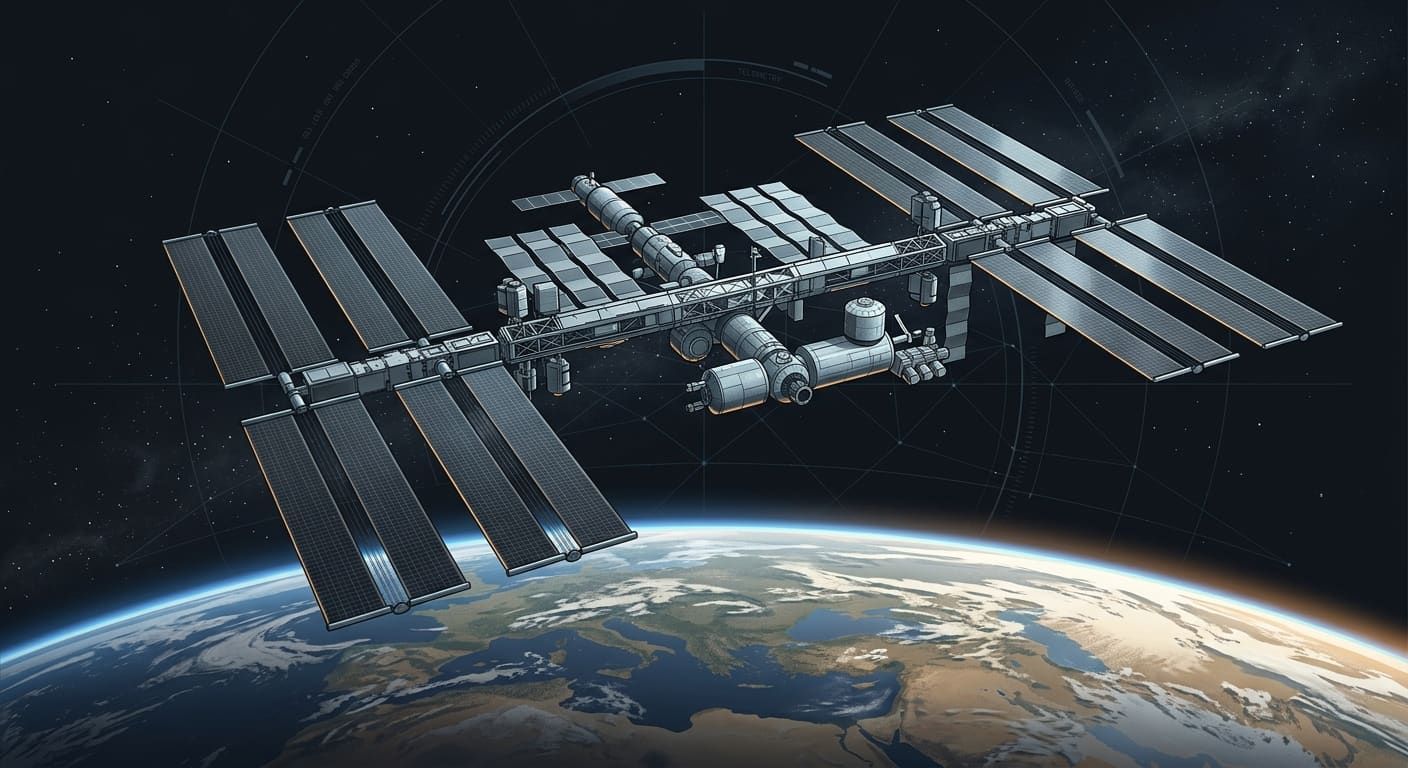
Humanity's main outpost in low Earth orbit is retiring by 2030. Here is how four private companies are racing to build its replacement.
For more than two decades, humanity has maintained a permanent foothold in the cosmos. The International Space Station (ISS) has been continuously occupied since November 2000, serving as a floating laboratory and a symbol of international cooperation. But this massive orbital structure is aging, and its run is coming to an end. The National Aeronautics and Space Administration (NASA) and its international partners plan to operate the station through 2030 before retiring it. Under NASA's current plan, a custom spacecraft called the U.S. Deorbit Vehicle (USDV), which SpaceX is contracted to build, will physically drive the ISS into a remote area of the Pacific Ocean around late 2030 or early 2031.
The next place humans live in space will not be a government-owned megastructure. Instead, NASA wants to rent space from the private sector through its Commercial LEO Destinations (CLD) program. This is NASA's program to help U.S. companies design privately owned stations that NASA can later buy services from. The agency is trying to buy future lodging instead of owning the platform itself, targeting a 30-day crewed demonstration with four people by 2030. NASA wants at least one private station operating before the ISS is retired to avoid a gap in low Earth orbit (LEO), the band of space a few hundred kilometres up where the ISS flies. If no commercial station is ready, extending ISS operations remains a backup option, but it is not the primary plan. For the first time, the next human outpost in LEO is being bid out to companies, and several firms are racing to build that foothold. While some industry groups pitch a long-term future worth trillions of dollars, the immediate reality is a high-stakes race to build real hardware.
So, who is actually closest to putting a new home in orbit?
Vast and the Single-Module Sprint
To understand where this race is headed, look at the company trying to bypass years of complex orbital assembly by launching a single, pre-built station. Vast, the Long Beach company founded by Jed McCaleb that is building Haven-1, is taking a fast, privately funded route. Unlike its competitors, Vast did not win one of NASA's original 2021 funded CLD awards. Instead, under CEO Max Haot, they are self-funding a sprint to fly hardware first and compete for later NASA services.

Their entry point is Haven-1, Vast's first single-module commercial station. It is a compact, metallic cylinder measuring about 4.4 metres across and 10.1 metres tall, with a mass of roughly 14,600 kilograms. The module offers about 45 cubic metres of habitable volume, with 80 cubic metres of total pressurized space, designed to host four crew members on visits lasting about two weeks. Vast says the module is contracted to launch on Falcon 9, SpaceX's workhorse rocket, from Cape Canaveral. The company recently updated its launch readiness target to the first quarter of 2027.
The crew would arrive later inside Crew Dragon, SpaceX's crew capsule, on a mission designated Vast-1. This quick-to-launch design relies on a shortcut: public reporting indicates that a docked Crew Dragon will provide essential life-support help, including extra carbon-dioxide scrubbing. Vast cleared an early hurdle in November 2025 by flying Haven Demo, an uncrewed test spacecraft, to prove its hardware engineering. Their grander bid for future NASA contracts is Haven-2, Vast's proposed multi-module follow-on station, which would launch its first element around 2028 and expand into the 2030s.
While Vast plans a standalone sprint, another company is taking the opposite route by plugging directly into the giant station already orbiting overhead.
Axiom's Stepping Stone on the ISS
Axiom Space, the Houston company building Axiom Station, is taking a gradual approach that utilizes the current ISS as an active dock. Founded in 2016 by Kam Ghaffarian and Michael Suffredini, the company has deep roots in the space program. Suffredini ran NASA's ISS program from 2005 to 2015, giving the company massive operational credibility, though he stepped down as CEO in 2024. Today, the company is led by CEO Jonathan Cirtain.
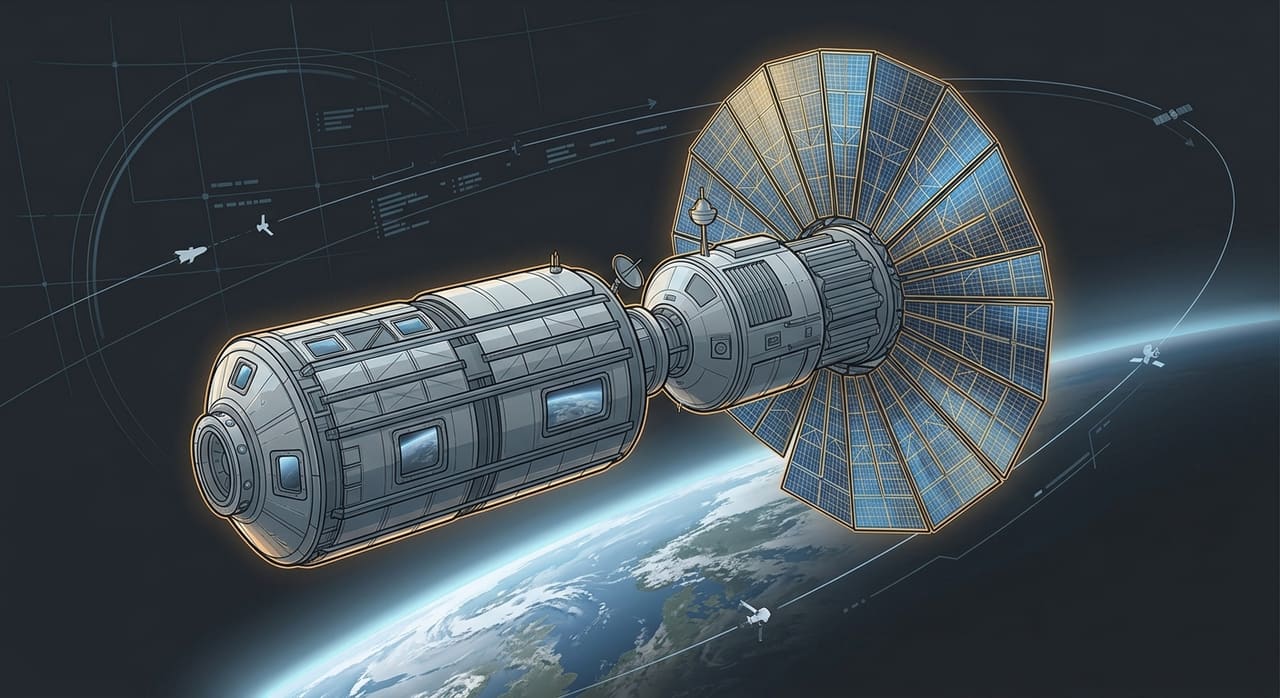
Axiom Space has already flown paying crews to the ISS, completing missions Ax-1 through Ax-4, with Ax-5 planned no earlier than January 2027. This means they are already training astronauts and coordinating with flight controllers. Their hardware strategy is tied to a separate 2020 NASA contract worth about 140 million dollars to attach a commercial module to the ISS.
Under their revised assembly plan, the Payload Power Thermal Module (PPTM), Axiom's first station element, will launch to the ISS no earlier than early 2028. After attaching to the ISS, it will later undock to meet Habitat One (Hab-1), Axiom's first crew habitat, which is currently being built by Thales Alenia Space, the European manufacturer building Axiom's primary module structures. Together, these two elements will form a free-flying, independent space station as early as 2028. This plan gives them the safety net of the existing ISS before they venture off on their own, but the actual free-flying outpost remains on the ground.
Two other well-backed competitors are skipping the ISS entirely, betting instead on massive rockets or expandable technology to build much larger stations.
Starlab and Orbital Reef
The heavyweight contenders in this race are forming massive corporate alliances to share the enormous financial and technical risks of building space hardware.
Starlab is the commercial station from Starlab Space LLC, a joint venture led by Voyager Technologies and Airbus, with partners including Mitsubishi Corporation, MDA Space, Palantir, and Space Applications Services. Starlab began with Nanoracks, which received about 160 million dollars in NASA seed money in December 2021. That award later increased to about 217.5 million dollars after Northrop Grumman dropped its own station design to fold its cargo and engineering work into the Starlab project.
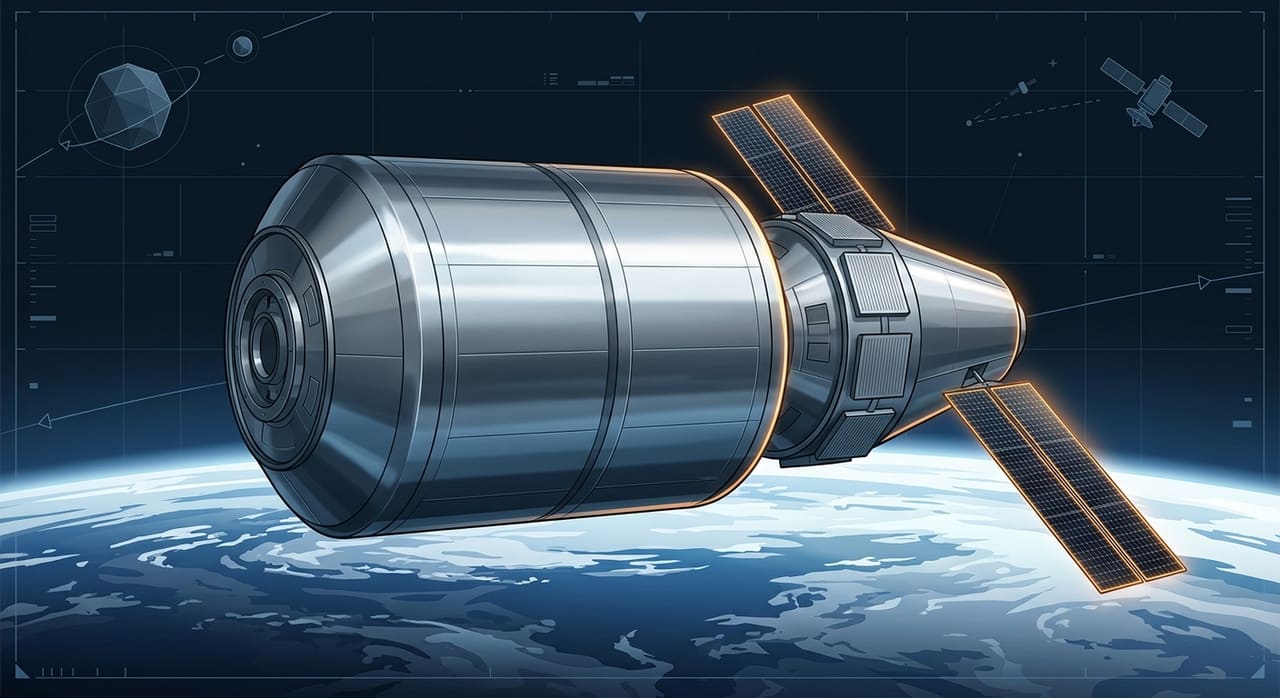
The Starlab design is a single, large metallic habitat made of stainless steel, about 8 metres wide, featuring three internal decks and a smaller service cone. It is designed to house a permanent crew of four, which can expand to eight during short handover periods. The team plans to launch the entire station, fully outfitted on Earth, on a single launch of Starship, SpaceX's super-heavy launcher, around 2029. Starlab reached a major milestone in February 2026 by completing its Commercial Critical Design Review with NASA, but the target date remains tied to the developmental timeline of Starship.
In contrast, Orbital Reef is the mixed-use station concept from Blue Origin and Sierra Space. Pitched as a business park in space, this concept received a 130 million dollar award from NASA's CLD program in 2021. The team completed a major System Definition Review with NASA around June 2025, though public reporting generally treats this concept as moving on a more conservative timeline than its competitors.
The key technology for Orbital Reef is Large Integrated Flexible Environment (LIFE), Sierra Space's inflatable habitat. This structure is built from high-strength fabric layers that launch folded inside a standard rocket fairing and expand to full size once they reach orbit, offering a massive volume-to-weight ratio. While Sierra Space is working toward a smaller LIFE pathfinder module, a full-scale inflatable station is still in the design phase.

| Station | Who | First hardware plan | How it reaches orbit | What is real today |
|---|---|---|---|---|
| Haven-1 | Vast | Q1 2027 (planned) | SpaceX Falcon 9 | Uncrewed Haven Demo test flight (November 2025) |
| Axiom Station | Axiom Space | Early 2028 (planned PPTM module) | Commercial launcher (planned) | Four crewed private flights operated on the current ISS |
| Starlab | Starlab Space LLC | 2029 (target) | SpaceX Starship | Passed NASA Commercial Critical Design Review (February 2026) |
| Orbital Reef | Blue Origin & Sierra Space | Multi-year concept (no set launch date) | Heavy-lift launchers (planned) | Passed NASA System Definition Review (June 2025) |
These diverse structural choices demonstrate that the race to replace the ISS is also a clash of fundamental engineering philosophies.
Metal, Fabric, and Who Pays
The technical divide comes down to a battle between rigid metal structures and flexible fabrics. Vast, Axiom, and Starlab are sticking to metal cylinders. This is the traditional way to build space stations: it is heavy, but the engineering is well-understood, and the manufacturing supply chains are already established. Sierra Space is betting on the inflatable approach, arguing that packing a giant habitat into a smaller rocket fairing is the only logical way to launch massive amounts of volume without needing a fleet of super-heavy rockets.
The assembly plans are equally divided. Starlab wants to build everything on the ground and launch it in one go. Vast is launching a small starter module first, while Axiom wants to build its platform while connected to the ISS before detaching. These systems are being designed with a heavy focus on interior aesthetics. Rather than the industrial, wire-strewn look of the ISS, designers are mocking up clean, minimalist cabins with large, clear windows. Because these stations must attract researchers, foreign governments, and paying tourists to survive financially, the interiors must feel less like a military submarine and more like a modern laboratory.
The financial structures are just as varied. While Axiom, Starlab, and Orbital Reef are relying on NASA seed money through the CLD program, Vast is funding its project privately. They are gambling that by putting hardware in space first, they can capture the market before NASA even selects its official successors. The second phase of NASA's commercial destination contracts, which will establish long-term service agreements, remained unresolved through 2026. This leaves the entire market up for grabs, with no single company guaranteed to win NASA's backing.
Why the ISS Hand-Off Matters
This commercial competition is a race against an absolute physical deadline. The ISS cannot fly indefinitely; metal fatigue, solar panel degradation, and micrometeoroid damage are catching up to the station.
If none of these commercial outposts are ready when the ISS is guided into the Pacific, Western nations risk losing their continuous human presence in LEO. While China's Tiangong space station is fully operational, it is a national project operated by the Chinese government, meaning a gap in Western capability would leave a massive geopolitical void. NASA wants to avoid this scenario at all costs, which is why they are pushing multiple companies to advance their designs simultaneously.
When the ISS eventually re-enters the atmosphere, human presence in orbit does not have to go dark. It could scatter across competing commercial stations. That is the bet. It is not guaranteed. The gap NASA fears is still possible if hardware slips. The story is not that companies have already replaced the ISS. The story is that they are being asked to, and the next few launches will show who actually can.
Subscribe to Apogee Log
Get deep-tech intelligence updates and featured analytical reports delivered to your inbox.