LandSpace Zhuque-2E: Everything You Need to Know About the Methalox Milestone
Space & Aerospace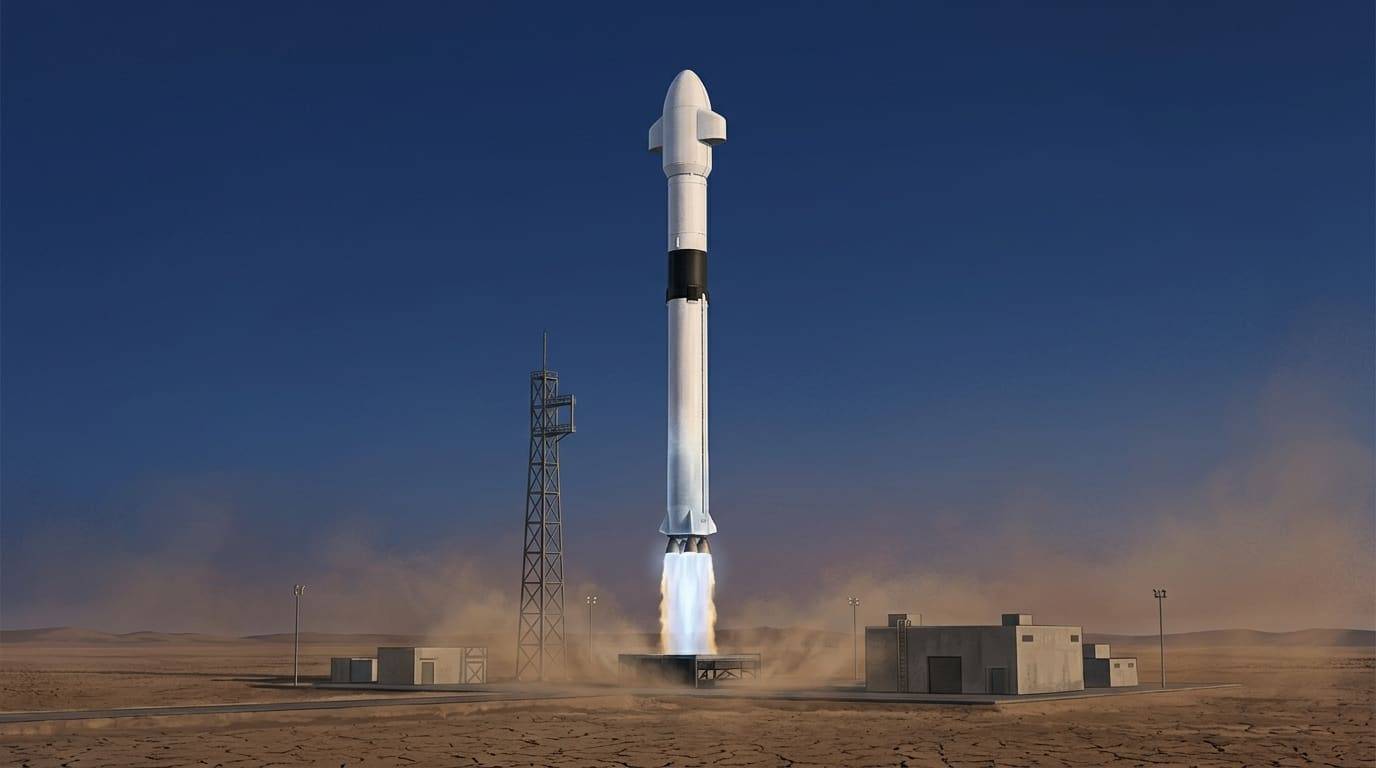
Zhuque-2E is the expendable methalox rocket built by the private Chinese launch company that first reached orbit using liquid methane and liquid oxygen. Its 14 October 2026 flight deployed ten experimental satellites while LandSpace continues testing its larger reusable sibling.
Imagine a rocket climbing out of the Gobi desert into the dusk, powered by liquid methane and liquid oxygen, while most international attention is looking somewhere else. At 19:40 Beijing time on 14 October 2026, LandSpace launched a Zhuque-2E rocket from the Dongfeng commercial pad area at Jiuquan, the spaceport in northwest China. Up inside the broad nose fairing were ten satellites: eight built to evaluate in-orbit computing, and two designed to test laser communications.
Yet the story behind this launch is bigger than its payload. The rocket on the pad, Zhuque-2E, is an expendable two-stage launcher that gets thrown away after a single trip to low Earth orbit (LEO), an altitude a few hundred kilometers above the ground. Just six weeks earlier, the same company managed to soft-land a much larger booster in the desert, only to watch it tip over on the pad. Understanding why both of these events matter starts with knowing who built the hardware.
A Private Rocket Company
LandSpace is a Beijing private launch company founded in 2015 by Zhang Changwu. Unlike China's traditional state rocket academies, LandSpace set out to build commercial launchers financed by private capital. Its initial attempt was Zhuque-1, a small solid-fuel rocket. On 27 October 2018, Zhuque-1 lifted off, but a third stage failure prevented it from reaching orbit. Rather than doubling down on solid propellants, the company abandoned the design entirely and shifted its long-term bet to liquid methane and liquid oxygen.
That gamble paid off in two historic steps. On 12 July 2023, a Zhuque-2 rocket became the first methane rocket (a launcher burning liquid methane fuel and liquid oxygen oxidizer) to reach orbit. That flight was a test run without operational satellites. Five months later, on 8 December 2023, the next flight put active customer satellites into a sun-synchronous orbit, a pole-to-pole path that passes over the same places at about the same local time every day. To understand why LandSpace built its business around this fuel, it helps to look at the chemistry behind methane rocketry.
What is Methalox
The word methalox is shorthand for a propellant pair using liquid methane as the fuel and liquid oxygen as the oxidizer, often written as LOX/LCH4. Every orbital rocket needs both a fuel and an oxidizer because there is no oxygen in space to sustain combustion. For decades, spaceflight relied heavily on refined kerosene or liquid hydrogen. Kerosene burns hot and dense, but it leaves behind dark soot that coats turbine blades and clogs the narrow cooling passages inside an engine. That soot builds up quickly, making engine reuse a maintenance challenge. Liquid hydrogen burns clean and offers high performance, but it must be kept at a frigid -253 degrees Celsius. Hydrogen atoms are so small and light that the gas leaks easily and requires massive, heavily insulated tanks.
Methane sits in a practical sweet spot between the two. Liquid methane boils near -162 degrees Celsius, while liquid oxygen boils near -183 degrees Celsius. Because these two liquids exist at similar temperatures, their tanks require far less thermal insulation between them. Methane is also much denser than liquid hydrogen, allowing engineers to build smaller, lighter tanks while retaining a burn clean enough to avoid heavy soot build-up. Other launch providers, such as SpaceX, also favor methane because it can theoretically be manufactured on Mars using atmospheric carbon dioxide and water ice.
Crossing the line from firing methane engines on ground test stands to flying them into orbit took years of frustrating attempts across the industry. The first Zhuque-2 launch in December 2022 failed to reach orbit due to an upper-stage plumbing issue. In March 2023, Relativity Space's Terran 1 rocket crossed the Karman line, the traditional 100-kilometer boundary of space, but failed before reaching orbital speed. SpaceX's massive Starship also fell short of orbit on its first integrated flight in April 2023. When LandSpace's second Zhuque-2 reached a 431 by 461 kilometer orbit on 12 July 2023, it secured the historic milestone as the world's first methane rocket in orbit.
That milestone came with important boundaries. LandSpace did not invent methalox, and the 49.5-meter rocket that made history in 2023 did not recover its booster. Burning a cleaner fuel makes engine reuse easier, but it does not make a rocket reusable on its own. Seeing how LandSpace turned that initial victory into a regular commercial workhorse requires a closer look under the skin of the rocket itself.
Inside the Rocket
The vehicle flying today is the Zhuque-2E (also written ZQ-2E), an enhanced and stretched Block 2 version of the original design. Standing 55 meters tall with a body diameter of 3.35 meters, it is a two-stage launcher that burns supercooled liquid oxygen and liquid methane on both stages. The nose features a payload fairing roughly 4.2 meters wide and 8.7 meters tall, making the top fairing noticeably broader than the fuel tanks beneath it. Unlike many heavy launchers, Zhuque-2E uses no solid side boosters, no aerodynamic grid fins, and no landing legs.
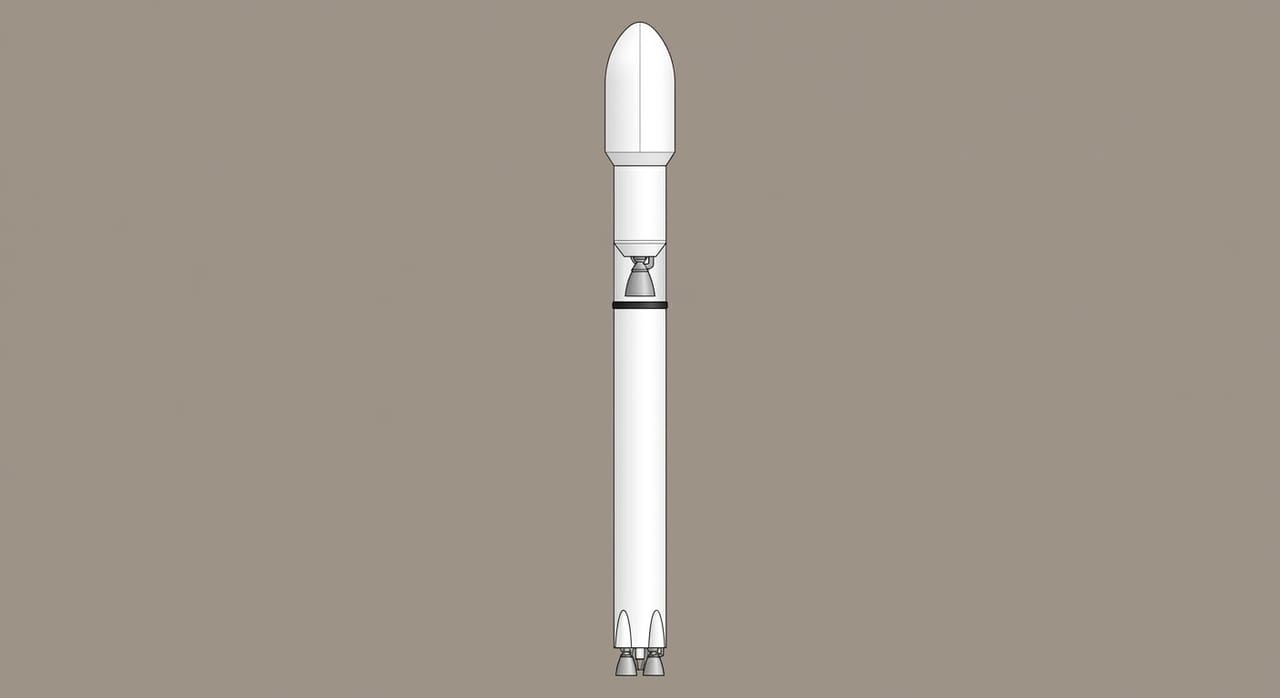
| Specification | Zhuque-2E Block 2 Specs |
|---|---|
| Overall Length | 55 m |
| Tank Diameter | 3.35 m |
| Payload Fairing | 4.2 m wide, 8.7 m tall (broader than body) |
| Liftoff Mass | 264 tonnes |
| Liftoff Thrust | 327 tonnes |
| First Stage Propulsion | 4 x TQ-12A sea-level methalox engines |
| Second Stage Propulsion | 1 x TQ-15A vacuum methalox engine |
| Propellant Pair | Liquid oxygen and liquid methane (LOX/LCH4) |
| Payload to LEO (200 km) | 6,000 kg |
| Payload to SSO (500 km) | 4,000 kg |
| Reuse Capability | Fully expended after flight |
The first stage relies on four TQ-12A engines. LandSpace states that each TQ-12A provides 84.6 tonnes of sea-level thrust with a specific impulse of 293 seconds. Compared to the older TQ-12 engine, the upgraded TQ-12A offers about 9 percent more thrust, improves specific impulse by 40 meters per second, and trims roughly 100 kilograms of mass. On the second stage, a single TQ-15A vacuum engine handles final insertion into orbit. While LandSpace demonstrated restarting a TQ-12A engine on a ground test stand, that ground test was an engine endurance trial. The Zhuque-2E rocket itself is completely thrown away after every launch.
A capable rocket is the foundation, but a growing record of successful launches is what builds confidence in its operational reliability.
Ten Flights and Counting: Building Momentum for the Future
The broader Zhuque-2 family has accumulated ten total launch attempts, yielding a mix of breakthrough victories, an electrical failure, and rapid recovery flights.
| Flight | Date | Result | What happened |
|---|---|---|---|
| Zhuque-2, 1st | 14 December 2022 | Failure | Upper-stage plumbing kept the second stage from reaching orbit. |
| Zhuque-2, 2nd | 12 July 2023 | Success | First methane-fueled rocket to reach Earth orbit. |
| Zhuque-2, 3rd | 8 December 2023 | Success | First time the family delivered working customer satellites. |
| Zhuque-2E Y1 | 27 November 2024 | Success | First enhanced rocket, about 47.3 meters, with the TQ-15A vacuum engine. Carried Guangchuan 01 and 02. |
| Zhuque-2E Y2 | 17 May 2025 | Success | Six Tianyi satellites toward a sun-synchronous orbit. |
| Zhuque-2E Y3 | 15 August 2025 | Failure | First stage and separation were normal. At 258 seconds a 450-volt servo bus on the second stage arced, the stage lost attitude, and the rocket destroyed itself. Four Guangchuan satellites were lost. LandSpace closed the review on 30 August 2025. |
| Zhuque-2E Y5 | 14 May 2026 | Success | Return to flight on the stretched rocket. About a 2,800 kg inert mass toward a 900 km near-polar orbit. Y5 flew before Y4. |
| Zhuque-2E Y6 | 9 June 2026 | Success | LandSpace reported a successful orbital flight. |
| Zhuque-2E Y7 | 15 September 2026 | Success | First scaled constellation flight. Catalogs list ten Qianfan satellites. |
| Zhuque-2E Y4 | 14 October 2026 | Success | Ten commercial test satellites. The vehicle number flew out of order. |
In total, the Zhuque-2E series has logged seven flights with six successes and one failure, maintaining three consecutive successful missions following the August 2025 short circuit. LandSpace has not published commercial launch pricing for the vehicle.
That tenth series launch brought a dense payload bundle that hints at future orbital infrastructure.
The Latest Mission
When vehicle Y4 took off from the Dongfeng area at Jiuquan on 14 October 2026 at 19:40 Beijing time, it carried ten satellites into orbit. Eight of these were high-performance computing test satellites from ADA Space: Xingshidai 39 and Xingshidai 44 through 50. The remaining two were Guangchuan 03 and 04 from Lanta Intelligence, designed to test space-based laser links.
The ADA Space hardware represents a second experimental batch designed to evaluate orbital data processing. The test objectives for these eight satellites include running high-performance computing workloads in space, establishing laser links between satellites and ground stations, deploying large radiative-cooling panels, running 10-kilowatt liquid cooling loops, and attempting to train an artificial intelligence model directly in orbit. ADA Space has spoken publicly about a prospective future constellation of roughly 2,800 satellites, but that target remains a long-term corporate ambition. October's launch was a test batch, not the buildout of a finished constellation.
While Zhuque-2E keeps flying commercial payloads as an expendable workhorse, LandSpace is actively building an entirely different machine to handle reusable spaceflight.
Zhuque-3: A Major Step Toward Reusable Rockets
To achieve true reusable launch services, LandSpace is developing Zhuque-3, a separate and substantially larger vehicle. A briefing submitted to the United Nations Office for Outer Space Affairs describes the flown Zhuque-3 as 66.1 meters long, weighing 560 tonnes at liftoff, and generating over 750 tonnes of thrust from nine TQ-12A engines. It is designed to deliver at least 9.4 tonnes of payload in reusable mode, with an architecture intended for over 20 flights per booster. LandSpace's stated objective of flying 20 times a year by 2027 represents an internal goal rather than a booked manifest.
Zhuque-3 made its first orbital attempt on 3 December 2025. The second stage reached orbit and completed a restart test, but the first-stage booster landing failed.
The program achieved a major milestone on 19 August 2026 at 07:35 Beijing time. The second Zhuque-3 vehicle launched from Jiuquan, separated its first stage 137 seconds into flight, and deployed the Honghu-03 satellite into orbit. At 07:41 Beijing time, the booster touched down on its landing legs at LandSpace Landing Site 1 in Minqin County, Gansu. LandSpace initially declared the landing a full success. However, pad video reported by NASASpaceflight later showed a fire near the base of the rocket and the booster tipping over after one of its landing legs failed post-touchdown. LandSpace previously discussed reflying a recovered booster within six months, but this specific airframe is unlikely to fly again, and the company has not released a detailed public report on the tip-over. Landing upright and achieving operational reuse are distinct milestones.
To fund this shift toward reusable operations, Reuters reported in August 2026 that LandSpace is preparing an initial public offering on Shanghai's STAR Market to raise 7.5 billion yuan (approximately $1.1 billion).
From Methalox Milestone to Reusable Ambitions
On 12 July 2023, Zhuque-2 made history as the world's first methane-fueled rocket to reach Earth orbit, marking a significant milestone in commercial spaceflight. What began as a breakthrough in propulsion technology has since evolved into something equally important: a growing commercial launch capability.
By October 2026, Zhuque-2E has established itself as a capable medium-lift launcher, with the Zhuque-2 family completing ten flights, overcoming technical setbacks, and successfully delivering complex satellite payloads into orbit. Meanwhile, the larger Zhuque-3 represents LandSpace's next ambition: making reusable rockets a practical reality. With two orbital flights and an initial landing-pad touchdown already achieved, the company is steadily building the experience needed to recover, refurbish, and eventually refly its boosters.
LandSpace's progress demonstrates that success in spaceflight is not defined by a single breakthrough, but by the ability to build upon it. From pioneering methane propulsion to establishing commercial launch operations and pursuing rocket reusability, the company has already crossed several important milestones. The next challenge is to turn successful launches into repeatable, recoverable flights. If LandSpace can achieve that, it will mark another significant step forward, not just for China's commercial space industry, but for the broader effort to make access to space more affordable and sustainable.
- space Archived2026.08.22
Why Japan Is Targeting Phobos Before Mars
Instead of racing to put boots or heavy treads on the Martian surface, JAXA is taking a clever detour. By targeting Mars' closest moon, the MMX mission aims to steal the secrets of the red planet without fighting its massive gravity well.
Subscribe to Apogee Log
Get deep-tech intelligence updates and featured analytical reports delivered to your inbox.