China's Humanoid Robots Are Learning to Run, Dance, and Fight: Here's Why It Matters
Robotics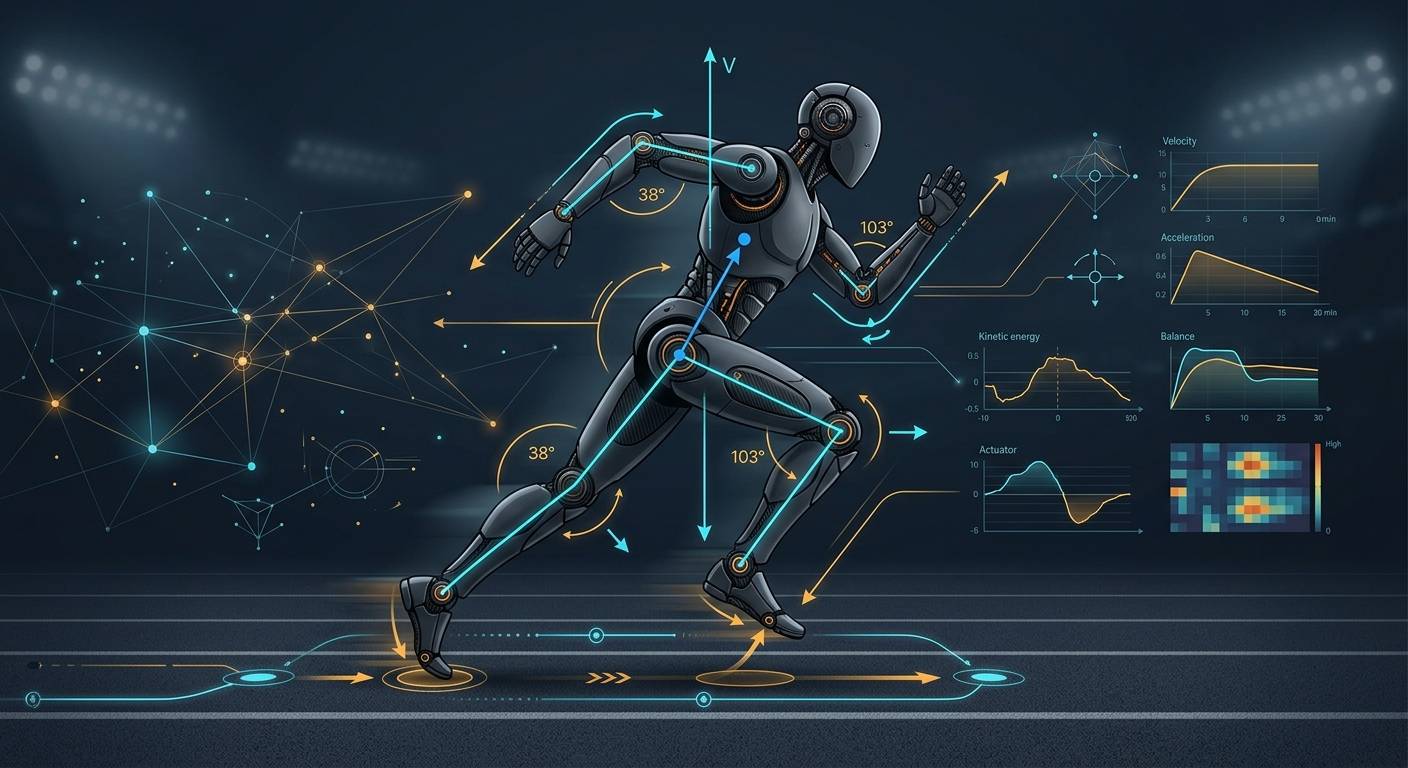
From running marathons to performing complex dances, China's bipedal machines are executing highly athletic feats. Discover the deep engineering challenges these public spectacles are designed to solve.
Imagine standing on a city street and watching a metallic, human-sized machine jog past you. It does not stumble. It does not stop to rest. Instead, it keeps a steady pace alongside human runners on asphalt. In recent months, onlookers in China have witnessed exactly this. Bipedal robots (meaning machines that walk on two legs) are no longer confined to quiet, pristine research laboratories. They are out in public, performing synchronized dance routines, running marathons, and showing off martial-arts-style kicks.
At first glance, these performances look like clever marketing stunts. However, there is a serious technical story beneath the surface. Running and dancing look flashy on video, but they hide some of the hardest problems in robotics. Chinese teams are moving unusually quickly. The harder question is what these machines can actually do once the cameras stop.
Introduction: The Robots That Want to Be Human
There is a massive gap between a flashy online video and a robot that can do real work. Today, social media is full of clips showing humanoid machines performing backflips, waving to crowds, or mimicking kung fu stances. These videos are highly entertaining, but they are also carefully staged.
These public displays are not just for show. They serve as open-air laboratory tests. When a robot runs or dances, it is pushing its motors, sensors, and software to their absolute limits. By forcing robots to perform these athletic tasks, engineers can find and fix weaknesses in design much faster than they could indoors. These performances are the ultimate stress tests for a new generation of machines.
The Robot Marathon That Made Headlines
Not long ago, a humanoid robot named Tiangong made headlines by participating in a public half-marathon event in Beijing. While the machine did not run the entire distance of over 21 kilometers without assistance, its presence on the course was a major milestone. Other similar bipedal machines have joined public exhibitions to show off their walking and jogging capabilities.
Running a long distance on open roads is a brutal test for a robot. It is not just about moving forward. The machine must deal with several harsh engineering realities:
- Battery Life: Humanoid robots carry heavy batteries. Running drains power incredibly fast, meaning engineers must balance weight against operating time.
- Heat Dissipation: Running makes electric motors very hot. Without proper cooling, a robot's joints can melt or lock up.
- Motor Durability: Every footstep sends a shockwave up the robot's legs. The internal gears must survive tens of thousands of these impacts without cracking.
- Gait Control: The software must adjust the robot's stride instantly when it steps on a crack, a twig, or a patch of wet pavement.
During these public runs, many robots still struggle, stall, or require human handlers to catch them. This shows how far the technology still has to go.
Why Is Running So Difficult for a Robot?
To understand why running is hard, stand up and take a quick jog in place. When you run, there is a moment when both of your feet leave the ground at the same time. You are essentially throwing yourself into the air and trusting your leading leg to catch you.
For a robot, this is terrifying. When both feet are off the ground, the machine has no physical connection to the earth. It cannot push against the floor to change its balance. It must calculate exactly how and where its foot will land before the impact happens.
If the landing foot is off by even a few millimeters, the robot will tip over. Human bodies do this naturally because our brains constantly adjust our muscles. A robot has to do this using mathematical sensors called gyroscopes and accelerometers.
Additionally, the robot's joint motors must act like car shock absorbers. They must instantly soften the blow of landing while simultaneously storing and releasing energy for the next step. If the motors are too stiff, the robot breaks. If they are too soft, the robot collapses into a heap.
Why Are Robots Learning to Dance?
Dancing might seem like a silly hobby for a multi-million-dollar machine, but it is actually a masterful demonstration of control. Unlike running, which is a repetitive, forward-pointing motion, dancing requires a robot to move in every direction at once.
To dance, a robot must coordinate its arms, hips, torso, and legs simultaneously. This requires two main technologies:
- Imitation Learning: Engineers record human dancers using special motion-capture cameras. They then translate those human movements into code the robot can understand.
- Model Predictive Control (MPC): This is a method where the robot continuously calculates its future moves to stay balanced. The robot's computer looks a split-second into the future, predicts how a dance move will shift its center of gravity, and adjusts its joints to prevent a fall.
When you see a group of robots dancing in perfect unison, you are not just seeing a choreographed show. You are seeing real-time physics calculations happening thousands of times per second.
From Dancing to Kung Fu: Teaching Robots Dynamic Movement
Recently, some Chinese research teams have shown robots performing rapid spins, deep stances, and martial-arts-style kicks. These movements are incredibly dynamic, meaning they involve rapid changes in speed and direction.
To teach these skills, engineers use a training style called reinforcement learning (RL). This is a trial-and-error training method where a computer program learns by receiving digital rewards for success.
Instead of practicing on physical hardware, the robot's brain is placed inside a highly realistic virtual world. In this simulation, the virtual robot tries to kick or spin millions of times. Every time it falls, the system penalizes it. Every time it stays upright, it gets a reward. Over time, the software discovers the perfect physics formulas for complex movements.
Once the virtual robot is an expert, engineers copy that software into the physical robot. This kung fu training is not about preparing robots for combat. It is about proving that a robot can recover its balance even after a sudden, violent disturbance.
Why China Is Moving So Fast in Humanoid Robotics
Visitors to robotics conferences in China are often shocked by the sheer number of different humanoid models on display. Dozens of startups and established brands are building their own two-legged machines. China is moving at this breakneck pace due to several distinct advantages:
- A Massive Manufacturing Base: China already makes the world's electric motors, batteries, and sensors. Robot designers can buy parts locally and cheaply.
- Fast Hardware Iteration: Because factories are nearby, a Chinese startup can design a robot leg on a Monday, have it manufactured on a Wednesday, and test it on a Friday.
- Government Focus: The Chinese government has designated humanoid robotics as a key priority, offering funding and specialized research zones to speed up development.
- Intense Local Competition: Dozens of local companies are competing fiercely for attention and funding, forcing everyone to innovate rapidly.
The Real Goal Isn't to Win a Marathon
No one is building humanoid robots just to win races or perform on stage. These athletic demonstrations are a path to a much bigger destination: everyday labor.
The same balance systems that keep a robot upright during a half-marathon will allow it to carry heavy boxes across a cluttered warehouse. The body coordination learned through dancing will help a robot gently lift an elderly patient out of bed without hurting them. The agility tested in martial arts will allow a robot to climb over rubble during a search-and-rescue mission.
However, we must be realistic. Walking on a stage is much easier than navigating a messy kitchen or a busy factory floor. True usefulness is still several years away.
China's Humanoid Robot Race vs. the US
The global race to build humanoid robots is largely a contest between China and the United States. Both regions have different strengths and philosophies.
| Feature | Chinese Robotics Sector | United States Robotics Sector |
|---|---|---|
| Primary Strength | Rapid hardware manufacturing and low-cost production | Advanced artificial intelligence and software design |
| Key Players | Tiangong, Unitree, Fourier Intelligence | Tesla (Optimus), Figure, Boston Dynamics |
| Strategy | Build many hardware versions quickly and test them in public | Spend years refining highly advanced software before public release |
| Supply Chain | Highly localized; parts are sourced within a single region | Rely on global suppliers, which can slow down hardware changes |
While US companies like Tesla and Figure lead in building the "brains" (the artificial intelligence) for robots, Chinese companies are incredibly fast at building the physical "bodies."
What Chinese Robots Still Can't Do
Despite the exciting videos, humanoid robots are still highly limited. Look past the hype for a moment. Here is what these machines still cannot do:
- They Cannot Think for Themselves: A robot running a marathon is following a pre-programmed path or basic GPS coordinates. It cannot make complex decisions on its own.
- Their Hands Are Still Clumsy: While a robot can run with its legs, its hands are often simple metal shapes. Designing fingers that can pick up a grape without crushing it remains a massive challenge.
- They Break Down Quickly: These robots require constant maintenance. A single run can wear out expensive joints, requiring team technicians to rebuild the machine.
- They Are High Cost: Building a humanoid robot is still extremely expensive, making them impractical for normal businesses for now.
Conclusion
The next time you see a video of a Chinese robot running down a street or dancing to music, do not dismiss it as a simple stunt. Look closer. You are witnessing a live engineering experiment designed to solve some of the hardest problems in robotics: how to balance, move, react, and interact with the world around us.
We are moving closer to a world where machines will walk among us. To get there, these robots must first learn to balance, run, and move naturally. The same advances in sensors, actuators, artificial intelligence, and motion control could eventually benefit more than robots. They could help engineers develop better prosthetic limbs, robotic exoskeletons, and rehabilitation systems that help people regain mobility.
The theater we see today may help build tomorrow's factory helpers, and it may also feed into technologies that help people walk, move, and live more independently. Keep an eye on battery lifetimes, hand dexterity, balance, manufacturing costs, and the ability to perform useful tasks in the real world. Those will be the true signs that humanoid robots are ready to leave the stage, and that the technology behind them is ready to make a difference in our lives.
Subscribe to Apogee Log
Get deep-tech intelligence updates and featured analytical reports delivered to your inbox.