Why Humanoid Robots Are Abandoning Wheels
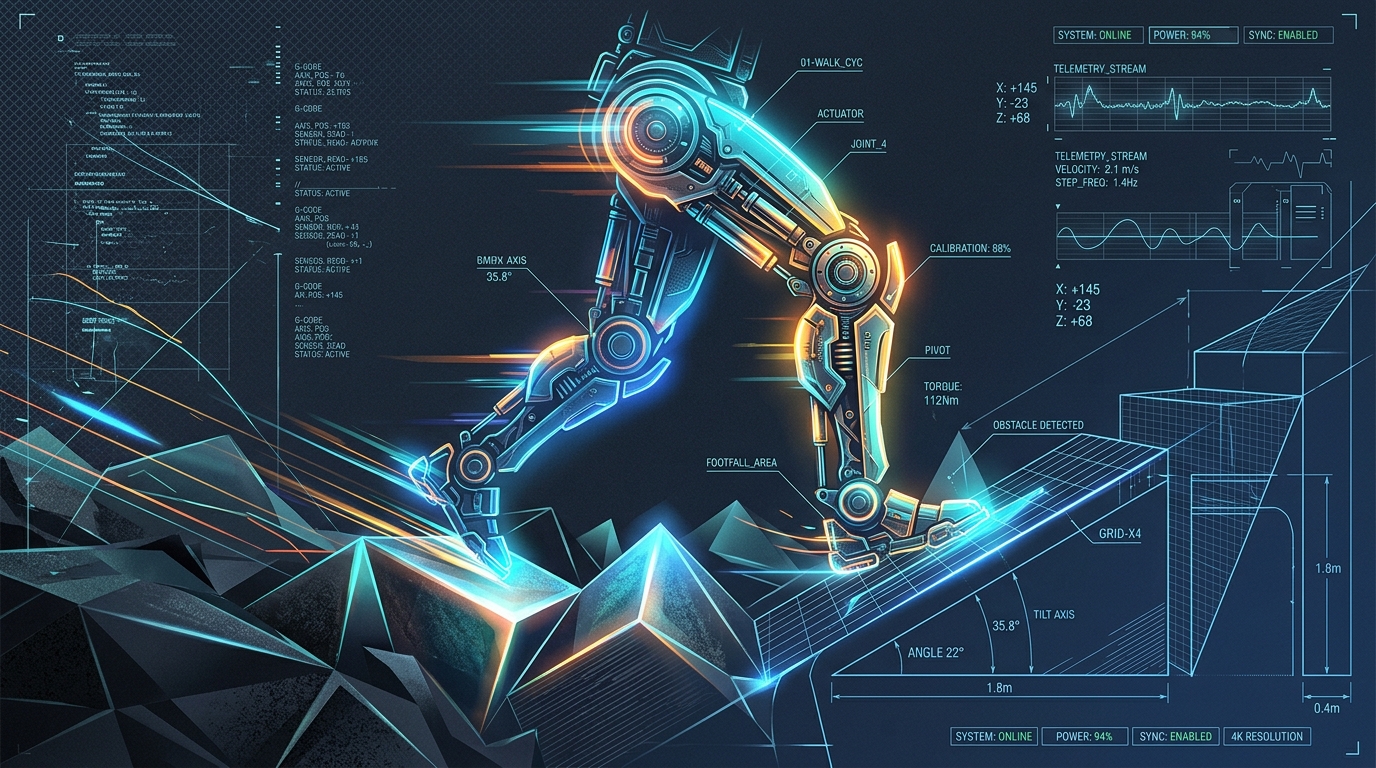
While wheels dominate flat warehouse floors, the next generation of automation belongs to walking machines. Discover why tech giants are betting billions on legs to conquer human spaces.
Look around you. Every door handle, staircase, countertop, and narrow hallway was built for a very specific machine: the human body.
For decades, robots have rolled through our factories on wheels. They are incredibly fast, highly efficient, and relatively cheap to build. Yet, companies like Tesla, Boston Dynamics, and Figure AI are spending billions to build complex, expensive, two-legged humanoids.
Why abandon the elegant simplicity of the wheel for the clumsy, challenging art of walking? The answer lies in the friction between our structured human world and the realities of physics.
The Ultimate Mobility Showdown
To understand why walking is worth the engineering headache, we must look at how legs and wheels perform when faced with different environments.
Wheeled Robots: The Efficiency Kings
Wheels are brilliant, but they are specialists. They require flat, predictable surfaces to succeed.
- Pros:
- Incredible Speed: Wheeled systems can travel at high speeds with minimal mechanical strain.
- Energy Efficiency: A rolling wheel uses very little power to maintain momentum. When stopped, a wheeled robot consumes virtually zero energy to stay upright.
- Mechanical Simplicity: Fewer moving parts mean lower manufacturing costs and fewer points of failure.
- Cons:
- Terrain Lock: A simple six-inch curb or a single step can completely stop a wheeled robot.
- No Verticality: Wheels cannot climb ladders, step over rubble, or navigate steep, uneven inclines.
- Large Footprint: Turning in tight, human-sized spaces often requires complex multi-directional wheels that struggle on carpets or debris.
Legged Robots: The Ultimate All-Terrain Vehicles
Legged machines trade simplicity for absolute freedom of movement.
- Pros:
- Step-Over Ability: Legged robots can easily step over obstacles, navigate debris, and climb stairs.
- Human Compatibility: Because they share our footprint, they can work in any space built for humans without requiring expensive renovations.
- Unmatched Adaptability: Legged robots can shift their center of gravity, squeeze through tight gaps, and even crawl if necessary.
- Cons:
- Extreme Complexity: A bipedal robot requires dozens of high-torque motors working in perfect sync just to take a single step.
- High Power Consumption: Legged robots burn battery power constantly, even when standing completely still.
- High Unit Cost: The specialized actuators, sensors, and materials required make walking robots incredibly expensive to produce.
The Real-World Pioneers
Several tech heavyweights are actively trying to bring walking robots out of research labs and onto the commercial market.
Boston Dynamics has long set the gold standard with its Atlas platform. Recently upgraded from hydraulics to fully electric actuators, Atlas showcases mind-bending athletic agility. It can jump, flip, and navigate treacherous construction debris, proving that legs can match—and sometimes exceed—human physical capabilities.
Meanwhile, Tesla is developing Optimus. Rather than focusing on gymnastics, Elon Musk’s team is optimizing Optimus for high-volume manufacturing. The goal is a robot that can seamlessly take over repetitive, dangerous tasks on factory floors designed for human workers.
Figure AI is taking a highly commercial approach with its Figure 02 humanoid. Backed by tech giants like Microsoft, Nvidia, and OpenAI, Figure is focusing on commercial deployment in automotive warehouses, teaching its robots to walk, carry boxes, and work alongside humans in tight, dynamic spaces.
From Mars to Deep Earth: The Exploration Contrast
We can see this architectural divide play out clearly in how we explore other worlds.
To date, planetary exploration has been dominated by wheels. NASA’s Mars rovers—like Curiosity and Perseverance—rely on rugged, rock-climbing wheels. On the flat, open plains of the red planet, wheels are perfect. They offer unmatched endurance and distance, allowing rovers to travel miles over years on incredibly limited solar or nuclear power.
But wheels have limits. They cannot descend into deep, rocky volcanic fissures, explore tight Martian caves, or climb the sheer cliffs of lunar craters.
For these missions, space agencies are designing future legged explorers. Small, four-legged robotic dogs can leap across boulders, scramble down loose scree slopes, and access underground lava tubes that may hold the key to finding extraterrestrial life. Wheels get us to the planet; legs will let us explore its secrets.
The Energy Problem: The High Cost of Walking
Why has it taken so long for walking robots to become viable? It all comes down to battery and power tradeoffs.
When a wheeled robot stops moving, its motors lock, and it can sit idle for days without draining its battery. A bipedal robot has no such luxury.
To stand upright, a two-legged robot must engage in active balance. Its onboard computers must read data from gyroscopes and sensors hundreds of times per second, sending tiny corrections to its hip, knee, and ankle actuators just to keep from falling over. This constant micro-adjustment burns precious battery life.
Today's humanoids generally have a runtime of only two to four hours before needing a charge. To solve this, engineers are optimizing three critical areas:
- Regenerative Braking: Capturing energy when a leg swings downward and feeding it back into the battery.
- Dynamic Walking Algorithms: Designing software that allows robots to use natural forward momentum—essentially a controlled fall—rather than forcing every muscle to fight gravity.
- Custom Actuators: Developing high-efficiency, lightweight electric motors that deliver massive torque without overheating or drawing excess current.
The Path Forward
We do not need to choose between legs and wheels. The future of robotics will likely be a hybrid one.
In flat, structured warehouses, wheels will remain the undisputed champions of efficiency. But as robots step out into our messy, unpredictable, and multi-level world, they will need to walk. By mastering the complex physics of bipedal balance, roboticists are finally building machines that can truly follow us anywhere.